

Frozen Ground
What I learned about rest in the city where World War II began

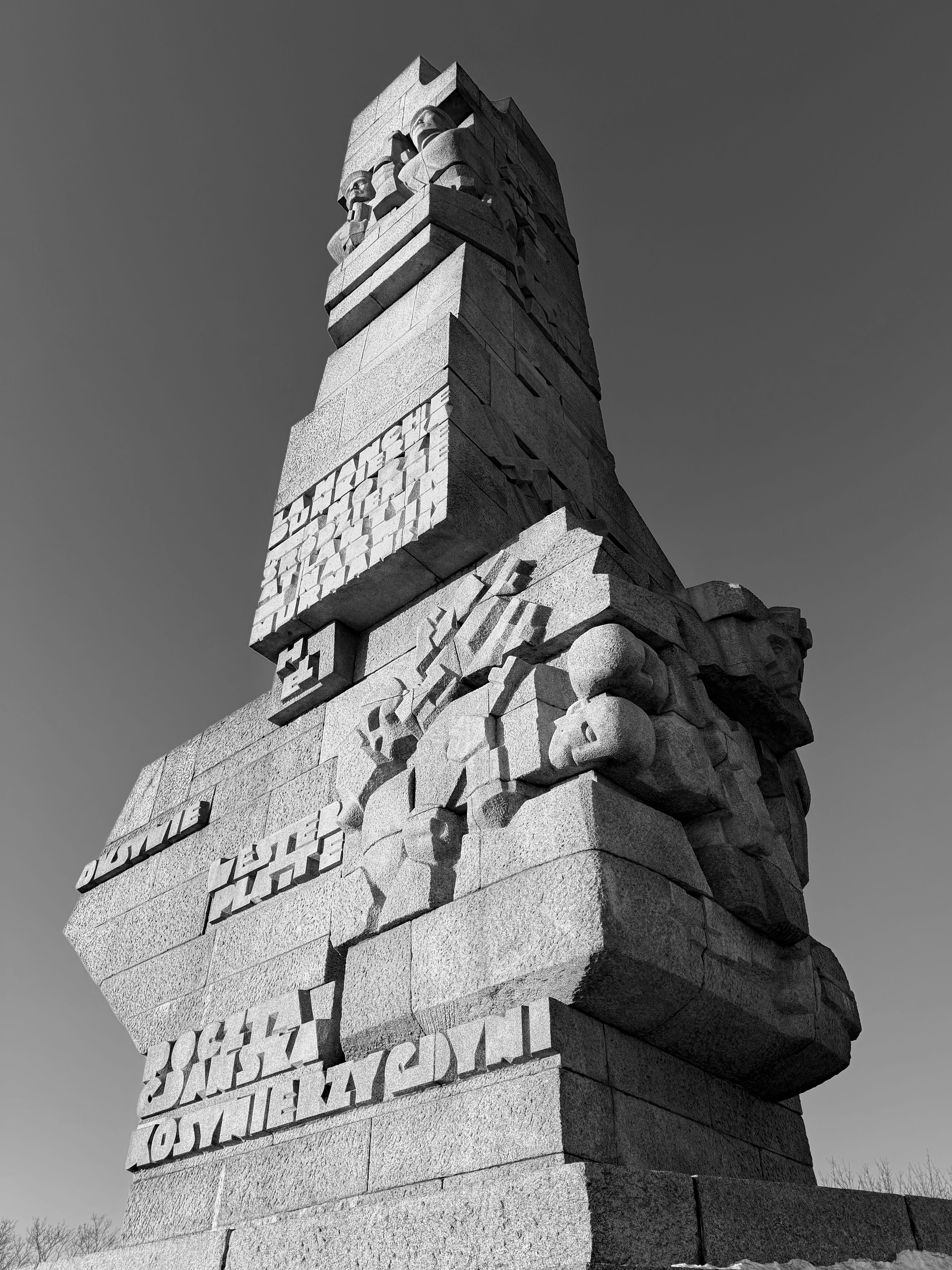
I’m standing at Westerplatte, the peninsula where World War II began.
On September 1, 1939, at 04:48 in the morning, the German battleship Schleswig-Holstein opened fire on Polish positions. Major Henryk Sucharski and his garrison of 200 soldiers were supposed to hold for twelve hours. They held for seven days against 3,000 German troops.
The bus from the center of Gdańsk to Westerplatte runs once an hour at best. You get off at a small parking lot, and from there it’s a long walk up to the monument. That day, it was minus twenty degrees. The wind sliced through every layer I own, and it was hard to stay outside for more than ten minutes at a time. The ground that should’ve been covered in grass was now covered in hard-packed ice. Each step, I was forced to check my footing because nothing beneath me felt stable. By one point, I couldn’t feel my fingers and toes.
But I wanted to see this place. I’d read about it, imagined the soldiers in these positions, wondered what it felt like knowing you’re outgunned twenty to one and choosing to stay anyway.
The ruins of Guardhouse No. 6 are still standing; two stories of reinforced concrete with bullet holes still visible in the walls. A sign at the entrance reads: Entry at your own risk. Area includes hazardous material to health and life.
The cemetery where the defenders are buried sits a short walk away. Quiet. Eerie. Now covered in snow with names of the soldiers carved into stone.
There I was, standing on frozen ground that absorbed the first shots of the deadliest conflict in human history.
And somewhere in the back of my mind, I heard a voice say: you should be working on that article.
Three days later, I’m in the Museum of the Second World War at the heart of the city.
We arrived around noon and didn’t leave until nearly six. The museum was over seventeen thousand square meters of history spread across eighteen sections. But even after almost six hours, we’d only covered around seventy-five percent of it. There was simply too much to absorb - survivor testimonies, personal belongings recovered from camps, the encrypted messages hidden in correspondence.
By the end, a part of me had stopped processing. You can only take in so much before something within you starts to shut down. Generations erased, and here I am standing in front of objects people touched in their final moments and seeing their faces in photographs that survived while they didn’t.
We walked out through the museum exit into the grey Gdańsk evening. My girlfriend looked at me and said what I should have been thinking:
Pranav. We need to eat. We haven’t eaten all day.
She was right. I hadn’t even noticed. I’d been inside my head the whole walk to the exit, engrossed by what I’d just seen, but once again, thinking about that article I needed to publish.
Two days and almost eight hours absorbing human tragedy and the first thing my brain reached for was a to-do list.
The compulsion to work doesn’t respect context or emotion. It doesn’t care where you are or what you’ve just experienced. It follows you. It whispers you should be doing something even when you’re standing on ground soaked in history and even when the cold is so brutal you can barely feel your fingers.
Maybe it’s just me.
Maybe it isn’t.
I’ve always assumed this was a good thing. From my perspective, discipline and commitment are a core part of why I’m able to do what I love most.
But last week, I caught the belief I’ve been unknowingly carrying for years, and I never really examined it until this trip. The belief goes something like this:
Rest is not part of the equation. Results come from work. If my foot is not on the pedal, I’ll fall behind, and when I do, a different version of me could be getting ahead.
It sounds rational. Productive, even. But when you follow it to its logical end, running through a task-list on auto-pilot is not discipline or commitment.
I’m turning thirty this year. And there’s a part of me that believes if I’m not constantly pushing, creating, constantly moving forward, then I’m failing. The person I become when I’m not working feels different in a way I’ve never been able to articulate. Almost as if rest is something I haven’t quite earned yet.
The belief that only pure work produces results is a trap in itself. You’re physically present but mentally somewhere else entirely.
The last day of the trip, we went to a spa.
It had four different saunas, a swimming pool, a jacuzzi - the whole experience. I’d been looking forward to it, knowing this would be a proper reset before heading back to Sweden. I moved from room to room, letting the heat work through muscles that were tensed stiff against the cold for days.
Somewhere around the third sauna, sitting at forty five degrees with a hundred percent humidity, I noticed something strange. My mind had gone quiet. It was just... empty. I felt present in a way I hadn’t been all week.
And then, out of nowhere, an answer to a question I’d been circling for months hit me like a strike of lightning.
I wanted to know how I should position something I’d been working on. How to talk about it. How to share it with the world. I’d thought about it constantly but still couldn’t land on an approach that felt right.
But in that moment, without even trying or thinking about it consciously, the answer showed up. It was so simple. So obvious. The solution that makes you wonder why you couldn’t see it before.
I’d spent the entire trip fighting the instinct to jump back into work. And the one time I fully surrendered to doing nothing - really nothing, no phone, no notes - everything I’d been chasing came to me on its own.
I don’t have this figured out.
I’m not going to pretend that one trip to Gdańsk rewired years of conditioning. The instinct to work is still there. I felt it on the flight home and in the moment I walked through my front door.
But that voice that says you should be doing something is not always right.
For now, I’m going to try a small experiment. Thirty minutes a day blocked out with no agenda. Unlike meditation, this is just my version of “sacred hours” to sit, think, and let my mind wander wherever it wants to go with no problem to solve.
Maybe by creating a small pocket of time, I can actually hear what’s underneath all the noise.
I’m still figuring it out.
But I’m no longer standing on frozen ground, surrounded by history, thinking about my to-do list.
Talk soon,
Pranav